Showing posts with label restaurant review. Show all posts

Sunday, February 24, 2008

The Whisk & Ladle Supperclub: Williamsburg.


Even before asking one's name, everyone introduced themselves at TheWhisk & Ladle with one question: "So, how'd you get in?"

Since its official opening in September 2007, The Whisk & Ladle supperclub in Brooklyn has been shrouded by the mystery of exclusivity. The five-course dinners are strictly by invitation only, which can be requested through their website. Many of the people who attended dinner in late February had been on a waiting list for six to nine months. Some had sent multiple requests, and were in awe that their requests had been answered, nevermind actually to have been accepted.

For $50, a trio of by amateur foodies prepares a five-course meal for about 26 guests in their superbly decorated Williamsburg loft. Specialty cocktails and wine include Whisk & Ladle has no liquor license, nor has it been approved by the New York Department of Health. None of the cooks have been professionally trained, and the supperclub doesn't have a Zagat rating. But getting a reservation at the Whisk & Ladle may actually be more challenging than getting a reservation at Babbo, Del Posto, maybe even French Laundry. Whisk & Ladle's publicity is simply by word-of-mouth and the occasional, adulatory review on Gawker or Thrillist that certainly helps to increase the hype (and effectively water down the crowd).

Whisk & Ladle started back in 2002 as a series of dinner parties thrown by the original W&L cook in her Inwood apartment. When she made the decision to attend law school over culinary school, her regular soirées became necessary to reinforce her raison d'être. Then in 2006 after relocating to Williamsburg and taking on three roommates, the lawyer-chef developed the Whisk & Ladle as a pseudo-business, run exclusively on minimal profit just for the hell of it.

The original cook was in absentia for the dinner I attended. Instead, all five courses were conceived and prepared instead by one of her culinary partners, a charming and friendly educational entrepreneur who was as excited to be a member of New York's revolutionary food underworld as he was humbled by his lack of formal culinary training. With a kitchen staff of about eight, plus additional servers, he executed a dinner for 26 people with a hardworking precision and a contagious enthusiasm that kept his service from seeming at all routine.

The ostensibly pirate-themed insignia of the Whisk & Ladle, a skull and crossbones trapped inside the wire loops of a whisk, is a far cry from the decorations of the dining room apartment itself. The multi-level, high-ceilinged industrial loft is ornamented by a slathering of vintage goodies, from a grandfather clock to a banner of the worlds great Communist leaders (which happens also to be the banner for the quartet's badminton team, The East River Badminton Club). The atmosphere is welcoming, but tense. W&L's owners and groupies are keen to strike up conversation and invite you with grace into their home. Among the supperclub's eager, Gawker-reading guests however, there is the tension of feigned pretension, coupled with awestruck gratitude to be dining inside the club's cinderblock walls.

The evening opened with signature cocktails at the bar. Located within the open kitchen area, the bar gives a view into the bustle of last-minute preparations and plating, where as many as six cooks and prep cooks work all at one time all in the same, tiny space. The cocktails at the bar are nothing but pure genius; names such as "The Freshman Girl" and "Fleurs du Mal" hearken back to the good old days at University. The "Fleurs du Mal" was my potion of choice, the most conservative and elegant mixture on the menu made of vodka, Framboise, and Champagne with just a touch of lemon. The bartender, an affable Hamptons summer journalist by profession, creates all of the drinks himself, using an array of ingredients from cantelope to red onion.

Dinner began with a trio of soup shots, all playing on the cook's interest in making the perfect stock. The first, Tomato Soup with Apples, used an onion stock base. Its murky, caramel color suggested cream, but the soup was actually quite brothy and warm. The next was a Duck Soup with Cream-Poached Garlic, garnished with bits of scallion. For some, this was the favorite, but I found it to be far too salty (and would have been far better utilized in the main course, more later). The last soup was a Mint Lamb Broth. Simple and rich, it was quite a good stock to use in dishes, but would not have been interesting enough if it had been served as a full serving of soup.

With a loud clapping of his hands, the cook and host announced dinner and invited us all to sit around three tables with mismatched vintage chairs, flatware, and generous pours of Alsace wine. The appetizer course was an exploration into onion done three ways: Poached Cipollino with Chèvre Brulée; Leek purée with whipped potatoes; Scallion-parsley salad atop an Asiago crisp. The cipollino was a novel idea, but could have been poached a bit longer (and perhaps in a more flavorful broth) to make it less pungent and strong. The chèvre brulée was creamy and incredibly fresh. The leek purée was absolutely delicious with a perfect, sinewey texture that was complimented by the smooth whipped potatoes. The scallion-parsley salad resembled a fattoush, and was surprisingly full of flavor for herbs to be found in winter. The salty and oily asiago crisp was a nice contrast to the freshness of the bitter herbs.

The highly anticipated main course came after a long wait: Turkey breast with Chicken Liver, Duck, and Brussel Sprout stuffing with Macadamia Nut Crust. This was served next to Nutmeg Polenta, with a side of bite-sized bits of perfectly poached asparagus and a strawberry relish. In later conversation with the cook, I learned that the inspiration for the main course was simply "why not". Since the head cook was out for the night, our cook decided on turkey because it was the one protein that W&L had never done before. The addition of the other fowl as a stuffing was his take on Turducken.

The result was quite good, but just missed excellence; the stuffing on its own was very tasty, but it lacked enough salt and fat to hold its own or even complement the thick and tough meat of the turkey breast. The macadamia crust was a great complement for texture, but would have benefitted from a quick toast in the broiler to bring out the flavor of the nuts and add some color to the white meat. I absolutely love polenta, and I was charmed by the creamy corn sidedish with the unique and distinct taste of nutmeg. Nutmeg, because it is so pungent, is a challenging spice to use, but the cook put in just the right amount to make this unusual spice twist really work. I really appreciated the asparagus, both for color and for the freshness of the vegetable. Though the colors on the plate were rather bland without the red strawberry, a midwinter meal can be served with varying neutrals, offset by the deep green of the asparagus.

My two major qualms with the main course was the turkey's lack of moisture and the addition of the strawberry relish. The cook told me that his signature touch is always to have a contrasting fruit on the dish to add another dimension of flavor. I think this idea is excellent, but I would have done it a bit differently. To begin, I would have taken the duck soup from the starters and reduced it to a semi-thick gravy, serving it as the piping hot base layer on the plate. I would have then added the creamy polenta in a mound atop the gravy, also served piping hot to keep it from losing heat en route to the table. The turkey would have then been served, as it was, in tasting-menu portion slices atop the polenta to reveal the inner stuffing. A slight drizzle of gravy to wet the dry turkey and finish the plate, and then served a complementary, seasonal pear chutney -- the spicing of which I leave to the imagination and craft of W&L's cook for future meals. The main course was a good concept and a good start, but there is room to improve this dish for future meals.

Dessert was served with black and green Darjeeling teas that were smuggled in from a W&L comrade's recent trip to India. The teas were delicate and exquisite, perfect for the sweet course. Dessert was a tasting trio: a Raw Chocolate truffle, homemade by the one of W&L's neighbors; Almond Cake with Pomegranate-Apricot glaze; and Gorgonzola Crema. The chocolate was so good that it was, without a doubt, worth breaking my Lenten abstinence from chocolate. It was dark, rich, bitter, and full of satisfying, sensual flavor. The almond cake was moist and textured, and the glaze was so fresh -- a perfect complement to the nutty richness of the cake. The gorgonzola crema, however, seriously confused me. It was way too pungent and strong for a dessert cheese, and distracted from the flavors of the cake, fruit, and chocolate. On its own, the crema would have made a great starter. But as a dessert cheese, it was too much an affront to the senses, and would have been better replaced by a more delicate version of bleu cheese, or a rich, fresh boucheon de chèvre.

Overall, the dinner was more like a tasting menu than a full, five-course meal. As a dinner among friends it was exceptional, but just fell short of the quality that comes with training to prepare a meal for a rated New York restaurant. However, I congratulate the Whisk & Ladle for their ingenuity and creativity, and the cook for his boldness in taking risks with ingredients when cooking on such a large scale. Despite all of the hubbub and Gawker-worship, the Whisk & Ladle has remained humble and excited about serving up interesting and unique meals. Even though reservations are scarce and the diners do tend to be a little overzealous, the supperclub really is just a really marvelous dinner party, thrown by a bunch of enthusiatic cooks who love what they do.

Sunday, September 30, 2007

Arthur Avenue: Little Italy in the Bronx


My father recently told me the following story. When my sister and I were young, my parents used to dress us up in fancy clothes and take us out to dinner, oftentimes to fine Italian restaurants around Connecticut. Our favorite was a lovely place in New Haven called Tre Scalini, an upscale favorite of Wooster Street residents in Little Italy. One Sunday night, I brought my little sister to the bathroom, and upon returning, showed my father two twenty dollar bills.

"Where'd you get that?" He asked.
"From the man at the bar over there," I replied, pointing to a man, well-dressed, well-jeweled, and in a finely-pressed suit.
"You can't take money from strangers," my father said, and called over our waiter to figure out how to return the gift. The waiter came by the table and my father inquired about the gentleman.
"Oh, you can't give that money back," the waiter said gravely. "You don't return gifts like that when the come from a guy like him." A wink and a nod.

Needless to say, my father was nervous so that we skipped our tiramisu dessert and left the restaurant without a fuss, but with a polite "thank you" to the signore, who replied with a nod of the head.

Now, thirteen years later, I recently found myself graciously accepting a liter of unfiltered Sicilian olive oil from the shop owner of Teitel Brothers Wholesale and Retail Grocery Company on Arthur Avenue in the Bronx. When I asked how much I owed him, the shopkeeper gave me an eye.

"Whaddya mean?" He asked me. A wink and a nod.


Arthur Avenue is Little Italy in the Bronx. Located near Fordam University between Fordam Road and East 183rd Street, this stretch of neighborhood is as close to an authentic Italian neighborhood as one can get in New York. Forget Little Italy in China Town -- uptown in the Bronx is the real . It is an Italian foodie's paradise; both sides of the street are packed with grocery shops, butchers, delis, bakeries, pastry shops, between which people are constantly running with their wares to meet the demands of a very hungry clientele.

Recently, my dear consigliere urged me to get to Arthur Avenue to do a story for Goûter; he had been there on numerous, storied occasions when he lived here in New York, and he knew that I'd love it. A few weeks later, my parents announced that they'd be coming into the city to go to the New York Botanical Gardens and then having lunch on Arthur Avenue nearby. I invited myself along with them and their friends, hopped the MetroNorth to the Bronx, and navigated my way on foot to Arthur Avenue, a place that somehow felt like home. Everyone was out on the street, enjoying the lazy breeze of the autumn afternoon. And yet, the whole street was in a wonderful commotion of people eating, playing cards, chatting at the salon, eating, toting around groceries, eating, yelling from windows, having discussions on the sly, eating, running through traffic, smoking, and eating. Italian was spoken everywhere by everyone, and hands were flying about expressively from hip to mouth to chin.

My father was hungry, so the first thing to do was find Enzo's, the restaurant where we had been told to eat by one of his colleagues who grew up on Arthur Avenue. Even with the plethora of great eats to chose from (Roberto's, Dominick's, Pasquale's, etc.), we were told that Enzo's was the place to go. It was a delight, indeed. Enzo's is a homey little trattoria where neighborhood regulars dine in big family groups. The restaurant has brick walls with large, medieval tapestries, an impressive rack of wine on display, and beautiful, hammered copper ceiling overhead. The food is traditional Italian -- simple, but delicious. Our hostess felt like an old friend (she knew someone with our same last name on Long Island, a baker...), and she doted on us with friendly curiosity. We ordered a bottle of Tuscan Sangiovese, Castello Banfi Rosso di Montalcino (2005) -- dry, oak-ey, and ruby red. We began the meal with a round of appetizers: salty Clams Oreganata, buttery Polenta with white beans and savory sausage, and fresh Mozzarella di Bufala with big slices of red tomato, crisp basil, and roasted red peppers. By the end of that feast, we were feeling full, but when the pastas came to the table, our appetites expanded, and we loosened our belts. Rigatoni alla Siciliana with hunks of lucious eggplant and mozzarella in a sweet tomato sauce; Cavatelli di Broccoli Rabe with sausage in fresh olive oil with garlic, and Orchiette with peppery sausage, chicken, and portobello mushroom in a spicy, chunky tomato sauce. We passed around plates, picking and tasting, wiping up the sauces with fresh Italian bread with huge pieces of black olive baked inside. All around us, everyone was enjoying the same tradition, clinking glasses of wine in the mid-afternoon and easing digestion with a bit of Sambuca.

From Enzo's we took to the street to explore the local vendors. My mother and I ran across the street to Biancardi's Meat, which was like an entire meat locker unto itself, crowded with people and pungent with the smell of freshly killed meats. Biancardi's is the home of the delicious sausage from Enzo's, which comes in two varieties: spicy, and mouth-blowingly spicy. At the back of the store, the ceiling is covered in various, long salumi hanging from meat racks, to the right of which is a brooding portrait of the Madonna.

Next we stopped into Addeo Bakers, whose enormous loaves of bread came in various shapes and sizes. Large circular loaves, long loaves, hundreds of breadsticks of different varieties, and so much more.

On the previous block was the celebrated grocer, Teitel Brothers. Established in 1915, the grocery is a tiny little store that is packed floor-to-ceiling with delicious, gourmet Italian foodstuffs. Out in front are paint buckets filled with a variety of dried beans, canned beans and tomatoes piled into high towers, jugs of various olive oils marking the entrance, and a strange display of salted eels splayed out, as if to guard the door from hungry intruders. Inside, the store consists of only one aisle into which everyone -- customers, runners, shopkeepers -- are packed. Everyone screams and shouts their orders because everyone goes to Teitel's with a precise list of what to buy. Perhaps that is why the shopkeeper came running toward me and I was looking over shoulders in an attempt to browse around the store. It was from him that I got the olive oil, and another confirmation that someone of my same last name is a baker in Long Island.

I lost track of my father and his friend, only to lose him further inside of the Arthur Avenue Retail Market, an indoor market of various sellers with a variety of delicious and bizarre wares. In the front of the store is an area inside of which a handful of men are busy at work rolling fresh cigars and chain-smoking the dregs all day long. My father got stuck with a man selling a hodge-podge of kitchen goods in an attempt to buy my mother an electric tomato sauce machine to replace the hand-grinder that he so lovingly attends to during tomato sauce season at home (when she discovered what he was up to, his efforts went for naught). I wandered into the back with Glen and Robin, my parents friends, only to discover more butchers (pig's feet, cow's tongue, lamb's head, kidneys, hearts, livers), a green grocer, and a giant salumi hanging from the rafters. People were eating everywhere, snacking on delicious savories and sweets. Our appetites whet once again, we headed back to the street in search of Stratciatella Gelato (fluffy, creamy vanilla with thin, wispy shards of dark chocolate).

On the street, we saw Alex, our waiter from Enzo's. He told us where to go -- a pastry shop "around the corner, four shops in." Following his instructions, we found ourselves at DeLillo Bakery, the family store once owned by the parents of author Don DeLillo. The smell inside the shop was warm and sweet, and enveloped us like the crunchy crust of a cannoli. We were tempted to stay, but there was no Stratciatella flavor that day.

Back on the street, I found my father focusing the camera on a dapper-looking gentleman in a stylish, pressed gray suit, pink shirt with jeweled cuffs, who was talking to a lesser-looking fellow in drab clothes. I watched as the smaller man caught sight of my father, and the two looked over with faces blank. My father clumsily pointed the camera up toward a street sign, snapped what turned out to be a fantastic picture (but not of them), and then he hurried around the corner, and pulled me out of sight.

Fortunately, we stumbled into Egidio's bakery, where we found our gelato. Yet again there was no straciatella, but the feast inside was exactly what we had been looking for. In fact, it was in Egidio's into which I first stumbled on my lost way to find the New York Botanical Gardens to find my parents, and when I saw the shop owner again, she immediately recognized me as though I were an old friend. Carmela Lucciola oversees Egidio Pastry Shop off Arthur Avenue on 187th street all on her own, and even owns a beautiful restaurant, Dolce Amaro, around the corner back on the Avenue. We chatted for a while over the counter (again with the relative who is a baker on Long Island), and then she sent me with one of her employees to scout out the restaurant -- the only one in town with an outdoor patio.

When I returned to Egidio's, I found my parents and their friends enjoying heaping bowls of glistening gelato, smiling and content. Carmela whisked me around the shop, chatting about business, the neighborhood, speaking in English, then Italian, then English again. Somehow, I was able to understand and keep up with her. Toward the back of the shop's cases stuffed with buttery cookies, I found a tray of chunky biscotti, Quaresimali, or Lenten Almond Biscuits. These hard and crunchy cookies were created especially for the lenten season when good Roman Catholic Italians abstain from tempting sweets. Quaresimali, however, don't count, and pair perfectly with a teensy cup of hot espresso.

It was nearing 5 o'clock and my parents and their friends had to leave before evening traffic set in (albeit, they were doing the reverse commute). We all reluctantly left Carmela ("Ce vediamo, tanti baci!"), and as I walked down the darkening street, I felt a small sense of loss. There are days when I believe that New York is the greatest city in the world, and other days when I feel trapped by the concrete and the anonymity of the busy sidewalks. Arthur Avenue is neither concrete nor anonymous; it is a place that feels like Europe in America, and welcomes visitors like family. Leaving Arthur Avenue held, for me, the same feeling of anti-climax after holiday meals at home are over, and my loud, boisterous family all goes away (minus the relief of making it past the inevitable arguments and impetuous jokes). But like a good Italian family, there is always an excuse for another reunion, and I've already promised Carmela that I will return for the holidays to eat at Dolce Amaro.

Until then, I'll be dousing my food in the gifted olive oil, whipping of batches of Quaresimali, and trying to figure out who this baker is on Long Island with whom I share the same, multi-syllabic, ends-with-a-vowel, Italian last name.

Arthur Avenue Photo Album


QUARESIMALI

(from italiancookingandliving.com)

Makes about 1 doz cookies
  • Sugar: 1 cup
  • Flour: 1 1/2 cups
  • Bitter cocoa powder: 1/2 cup
  • Hazelnut paste: 1 3/4 oz
  • 3 egg whites
  • 1 orange
  • Powdered vanilla or 1/2 teaspoon vanilla extract
  • Cinnamon
  • Baking powder: 1 tablespoon

Beat the egg whites until firm then add the sugar and the nut paste (this can be replaced with 1 3/4 oz of hazelnuts, finely ground in the food mixer).

In a separate bowl, mix the flour with the cocoa, the grated orange rind, a pinch of cinnamon, a little vanilla and the baking powder. Slowly fold this into the egg whites: you should obtain a fairly dense mixture.

On baking paper (or a buttered tray) form , using a syringe or confectioner's bag (space well as these will swell with cooking).

Leave to stand for about one hour, then place in a warm oven (300° F) for about ten minutes.


***


Enzo's
2339 Arthur Ave.
(bet. Crescent Ave. & E. 186th St.)
718.733.4455

Biancardi's Meat
2350 Arthur Avenue
718.733.4058

Addeo Bakers
2372 Hughes Ave
718.367.8316


Arthur Avenue Retail Market
2344 Arthur Avenue
(No phone)


DeLillo Pastry Shop
606 E. 187th St.
(bet. Arthur/Hughes Aves.)
718.367.8198

Egidio Pastry Shop
622 E 187th Street
718.295.6077

Dolce Amaro
2389 Arthur Avenue

347.270.0081


Thursday, June 28, 2007

taste.KEFI :: Upper West Side, New York


Kefi: a Greek word which translates roughly to English as "a rush of feeling that can only be expressed through singing or dancing." Unlike those stereotypical plate-shattering Greek restaurants such as those off of Boulevard St. Michel in Paris, Kefi on the Upper West Side is Michael Psilakis' more subtle intepretation on this state of grace. Instead of concentrating on a theatrical atmosphere, Mr. Psilakis concentrates on the food. The result is something rather special, and though its small, intimate, subterranean rooms might prove such revelry to be a bit difficult, Kefi has enough spirit and intimate romance to open the walls as well as your mouth to receiving an evening of convivial company, blissful cocktails, and of course, food that is worth celebrating.

Kefi is tucked down and away on a lovely but lonely block on 79th Street between Broadway and Amsterdam. Though I first was a bit lost, convinced that it would not be on a street across which I had walked hundred of time without noticing it before, I was happily proven wrong. Indeed Kefi was right there, happily and invitingly welcoming diners down a small flight of stairs to a large door that opens to a space decorated in light wood and deep navy blues. At the end of a short and cramped hallway, the back room opens to a small space with rows of modest, small tables. White fabric runs along the ceiling in undulating waves about chatty diners in small, intimate gatherings. This bustling room is a fesitval in itself, where the beautiful epicurieans of the Upper West Side come to taste a bit of Greece, throw back an ouzo or five, and drift away from the city under the guide of a handful of handsome, Grecian waiters.

Though the restaurant takes neither cash nor reservations, one would have thought we had paid off the reservations host when we were seated inside a personal, four-person dining alcove outside of the main room. The alcove, with a small, round pine table, navy blue walls, a strip of white moulding and a photograph of a statuesque goddess, was made rather private by two windowpane walls with an open doorway in the middle. The room was in need of something soft, like a celing fabric as was found in the main dining room, to keep the loud echo from invading conversation, but overall the intimacy of the room made it feel as though it were a world apart from the hot, summer city outside.


The whole menu was as mouthwatering as it was affordable; we ordered three courses, with plenty to share. Our charming and friendly waiter suggested the Roditis Momewasios Momemvasia white wine, 2004; upon first taste, notes of citrius and pear left a refreshing, crisp and dry finish on my toungue, and I began to understand why the restaurant had been given its name. The cocktail we ordered was even more impressive: the Gin and Tear was a perfect nod to the traditional gin and tonic, but spiced to Greek perfection with fennel syrup, and beautfully decorated with a layer of anise seeds at the bottom of the golden-green drink.

We started with the Greek salad, which despite its generous dressing, was a refreshing prelude to our foray into Greek cuisine. With fresh, creamy chunks of feta cheese, salty kalamata olives, and flecks of oregano, the salad was begging to be relished, and every last drop of Olive Oil to be wiped up with bread. We gladly obliged. The second appetizer, the Sheep's Milk dumplings with Lamb Sausage in Tomato sauce, was a surprise and an absolute delight. The dumplings were scrumption little squares with a soft and thin dougy outside, inside of which was a thick, creamy Goat's cheese that just barely melted by the heat of the dish. The sausage was outstandingly fresh and meaty, which was complemented perfectly by the red tomato sauce and well-portioned fresh sauteed spinach. The whole dish felt like it had been prepared by a loving -- and well-trained -- Greek Yiayia, and as I finished my last bite, I immediately began making plans to visit her again.

For entrees, the men ordered the two homemade pasta dishes, while the women kept exploring the meze. S.K. had a delightful Sheep's Milk Ravioli in a butter and sage sauce, which same with crisply fried tendrils of sweet onion. Brian's order of Hilopites kouneli, Flat pasta with Pulled Braised rabbit and Graviera Cheese, was quickly and heartly enjoyed; it was cooked in a red sauce that looked similar to the dumplings, and was finished by wiping bread to clear the plate to white. Hannah the Feta sto fourno, pita, Warm Feta with Tomatoes, Caper, Anchovies and Feta; it also came with beautifully fresh haricots verts, dressed in a delicious and savory olive oil. Upon recommendation before arriving at Kefi, I tried the Otapodi stin sxara, revithia, fasolia, tomates liastes: the Octopus and Bean Salad. The small plate arrived with one large, curling tentacle on top of a small mound of fresh white chick peas and white beans, to my friends' surprise. It was perhaps the best cooked octopus I have ever tasted: the outside skin was cooked to a perfect crisp to that the inside was still moist and chewy that the external toast served as a perfect compliment to the pure meat inside. The skin gave way to my knife, especially where the suction cups were larger, allowing me to taste the meat in its pure and delicious form. The bean salad was a lovely, fresh compliment to the heavy tentacle meat; the beans were fresh and al dente, whereas the bits of dried tomato gave a summer heartiness that made the little herbed salad rather elegant and savory.

The dessert menu is sparse, but absolutely do not ignore it. Though sorbets and gelatto might be the boring part of any dessert menu, at Kefi, they are certainly center stage. With gelato flavors as exotic as sesame seed, the one sorbet, rasperry port, is a sophisticated compliment. We all tasted the Poached pear dessert, which was a delightful surprise. The pear, made into a sort of violet-brown paste with chopped walnuts, was at the center of a nest of phyllo dought strands, with a bit of the sensual sorbet The rich, buttery nest fibers of the phyllo dough were offset well by the sorbet, balancing the heavy and the light to balance the dish and send us on our way, happy and satiated, with enough room left to dance and to sing.

About $25/person for shared three courses and a drink. I highly recommend going either for an intimate date or with a small group of friends to enjoy the handsome and friendly waitstaff and the elegant homey atmosphere ; the portions are satiating without being overwhelming, and the prices are generous. The food is excellent overall, and I will absolutely be returning for more. Opa!!

Kefi
222 W79th Street
btn Broadway and Amsterdam Avenue.
212/873.0200

Cash Only
No reservations


Try nine recipes from Kefi chef Michael Psilakis, care of Food & Wine magazine: Michael Psilakis's Recipes


Friday, June 22, 2007

taste.travel.ENGLAND: Part Four -- Cambridge

taste.travel.ENGLAND: Part Four -- Cambridge


- Introduction: A Cambridge Afternoon
- Punting on the River Cam
- Fitzbillies
- Midsummer House

Introduction: A Cambridge Afternoon

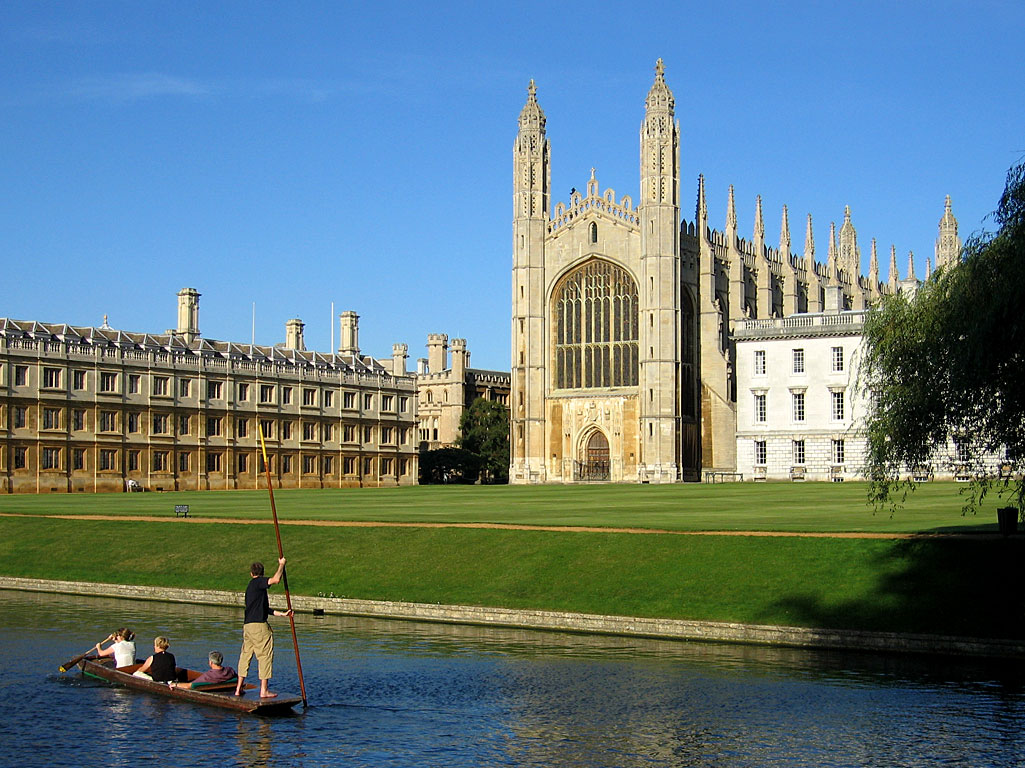
Cambridge University: the cradle of some of England's most revered intellectuals. Some of the notables who have walked through the university town's cobbled streets include Sir Francis Bacon, Oliver Cromwell, John Milton, Charles Darwin, Lord Byron, C.S. Lewis and A.A. Milne. The whole town of Cambridge is teeming with students and school masters, a number of whom can still be seen wearing the traditional academic gown. On the sunny Saturday of my visit, most students were milling around the River Cam, a pint in one hand and a textbook in the other.

Cambridge is an ancient university town. Located about 50miles north-northeast of London in the county of Cambridgeshire, the town still maintains its academic and historic integrity; as I walked around the cobbled streets, I felt as though I were ambling through a novel by Charles Dickens. All of the buildings and streets are made of beautiful, old stone, with slate roof tiles and stocky brick chimneys. Because all of the structures are so old, each one is relatively small at just three stories high; as a result, the skies over Cambridge are wide, open, and on this particular day in June, very bright and blue.


Punting on the River Cam

Passing through the town of Cambridge is the River Cam, a shallow and small river that runs from the public land farm fields, curves around the backs of the university (the local term to refer to "backs" of the university buildings), and ultimately connects with the North Sea at King's End. It is here on the River Cam that the Cambridge crew team can practice its sport. Of more important note, however, is the pastime for which this little river is known best: punting.

Every day, the River Cam is trafficked by hundreds of long, narrow, shallow-bottomed boats known as punts. These boats were originally built as cargo boats for shallow rivers and canals, but nowadays they are mostly used for pleasure trips like the one I took with the Hopes down the River Cam. Puntees in Cambridge can choose to chart a course themselves or they can hire an expert punter to be their guide. There are many different companies whose representatives walk all over the ancient streets and invite amblers to take a punting ride (much like New York PediCab drivers in Central Park). We took our punting trip with Cambridge Punt Tours, a delightful company with extremely friendly guides. (A punting trip for four on a shared boat cost £40 total.) Punting is not just a pastime for tourists; families, Cambridge students, Hen Parties (Bachelorette Parties) and dates all take punting tours to engage in lessons in history, picnics, cocktail parties and all other sorts of tomfoolery.

Some punts are small, while others are quite large. Our punt was the Cadillac of punts, affectionately named "Big Bertha." Despite the friendly ridicule we received from our lovely ship's name, we had a comfortable cruise during which we stretched out like Romans after a feast as we drifted through heavy afternoon punting traffic. The ride lasted forty-five languorous minutes, just enough time for a lesson in history while taking in a bit of sun. Our punt driver, a chap by the name of Rufus, kept us entertained and afloat as we learned all about the ancient univeristy. In addition to learning about the history of each bridge, the architecture of the buildings and the rivalry between Trinity College and St. John's College, we also learned about some smutty adulterous history between a University notable and a wealthy French lady, Rufus' "pet hate" of hen parties, and the fact that Oscar Wilde had affectionately dubbed the famous and ornate King's College Chapel "The Upside-Down Pig."


The most notable bridge is the Bridge of Sighs which runts between the college's Third Court and New Court. The bridge was named after the original Bridge of Sighs in Venice, but Rufus claimed that it was so called because Cambridge students must cross that bridge with bated breath as they pass through to write their exams. After a bit of Wikiresearch, I learned that the Bridge of Sighs is a popular prank site involving the use of cars:
"On two separate occasions, students have pulled the prank of dangling a car under the bridge. In the first incident (in 1963), a 1928 Austin Seven was punted down the river using four punts that had been lashed together - then hoisted up under the bridge using ropes. The second incident (in 1968) a Bond three-wheeler car was dangled under the bridge. In neither case was the bridge damaged."


Fitzbillies

Before our puntabout, we stopped for lunch and some fruity rosé at an elegant and jolly little place called Fitzbillies on Trumpington street in town. The restaurant is next to the original Fitzbillies bakeshop, a celebrated bakery that was founded in Cambridge in 1922. The bakeshop is known best for their Chelsea buns, delightful sticky cinnamon buns with raisins. The bakeshop still has its historical 1920's facade, and the windows are open and decorated in a style true to its origins.

If you are in town, this is a great place to stop for nice lunch. The menu dresses up simple lunch meals like wraps, soups and salads. Of note are the Greek salads for their fresh vegetables, lettuces and milky feta cheese, and the Salade Niçoise, which to my surprise, came as a rich tuna steak with green haricots verts, boiled egg and tomato in a warm olive-oil dressing -- without greens.

The service is friendly and quick if you want it to be, but this is a place where you can linger for a while with a juicy bottle of rosé after a long punt on the River Cam.


Midsummer House

There are few things as exciting to me as being taken to a restaurant for the first time. I love the anticipation of a meal out, of not knowing anything about the restaurant itself (except for the dress code, of course), and then to have its mystery slowly unraveled, hint by hint, until finally it finally comes into view and I know that I have arrived. It was this romancing of the restaurant that I was so fortunate to experience when I was taken out to dinner by the Hopes one evening in Cambridge to a lovely restaurant called Midsummer House.

But before I continue, I must pause to express my gratitude to John, Ann and Naomi for giving me this incomparable gift of sharing a first-rate meal. The food and that atmosphere were, as you will see, most exceptional. But in keeping with my central tenet of culinary culture, rarely can a meal of any caliber be enjoyed so well by yourself as it can in the company of others. To share an extraordinary meal with an extraordinary family – that in itself is a unique and blessed gift for which I will always be grateful and happily revisit often in my memories.

I was truly glad that I had packed the new dress I purchased at the Saks Fifth Avenue First Cut Sale the week before, because when I asked Naomi if a formal dress would be appropriate for dinner, she said: “Well, I do believe so, yes.”

In the morning, I asked John the name of the restaurant. “Midsummer House,” he said nonchalantly. “We’re going back to Cambridge. That's the second time this trip! It must be a sign, Amanda. I think you’re due to come back here to England someday after all.”

That evening, I followed Naomi’s lead as she elegantly and daintily slipped into the little red Mercedes wagon car, and once inside and after having crossed the pebbled driveway in her house shoes, she unpacked her heels from a shoebag and popped them on her pedicured feet. Anne sat queen-like and elegantly in the front, while John was at the driver’s wheel, stately and calm though the level of excitement was perceptibly high.

“So, tell me a bit about this restaurant, please, John,” I asked as I got my mental pen and reporter’s notebook ready in my head. “The chef is Daniel Clifford.” That was the first clue. When someone mentions the chef of a restaurant first, this clearly means that the restaurant is of significant note. “The chef and his staff change the menu every month.” This second clue affirmed the first clue to the restaurant's excellence in showing that the chef’s monthly menu change would mean a sharp attention to detail in his food. “And I think it has two, yes that’s right, it has two Michelin stars.”

I was then really happy that I had decided to bring my dress.

To get to Midsummer House, one must first navigate the very tiny and crowded residential back roads of Cambridge, and then start praying to the parking gods that there will be room enough on the street to park the car. After finding a spot and a leisurely walk on an enchanted-looking bridge over the River Cam, the restaurant came into view through the weeping limbs of an ancient Sycamore tree: it was a regal, Victorian stone cottage with a veranda and two chimneys. A garden was walled in with privacy screens atop, within which was a large greenhouse extension with wall-to-wall glass that come together in the front in two round bay windows. A little green, waist-high gate was the entrance onto the charming property, behind where a doorman opened the heavy wooden door with a smile and a polite salutation of “Bonjour, mesmdemoiselles.”

The décor of the restaurant is a very simple white, and uses artistic, wooden accents and glass sculptures to complement the stunning garden outdoors. The tables, dressed in white settings with a single, burgundy calla lily reclining in a clear glass vase, are spaced far enough apart to make this very intimate space seem like your own private dining room. As the four of us were seated, I felt like the very grateful guest of the Royal Family of the Priory, and my enchantment with my surroundings and my new friends took my breath away.

The menu of Midsummer House is available à la carte or as a tasting menu. The à la carte menu features a three-course prix fixe, with a cheese course and a coffee course available at an additional charge. We opted for the prix fixe, which gave us the chance to debate and explore our options as we sipped our aperitif.

The meal began with champagne and a toast to happiness and good health. A short while after, one attending waiter rolled a wooden cart to our table, which carried a beautiful pink and turquoise glass globe. Out of the globe’s top was a spray trigger, like those one finds on old-fashioned spritzer bottles. From this he sprayed a pale, white-pink cloud into purple glass cups shaped like the flower of the calla lily, as he explained: “Grapefruit foam with Champagne.”

The foam was sweet, tart and danced on my tongue. It was like tasting the cream of champagne foam, if such a thing existed to be able to scoop it with a tiny, silver spoon. It can only be described as one would describe a fine wine: it had notes of citrus and spring wildflowers, with a creamy finish and an aftertaste that sparkled. I ate this bit of cloud very slowly, hoping that it would not finish – or fall – too soon. After the cool refresher, we were treated to another delight: a warm pea velouté, smooth with a foamy cream. The velvety green soup was mostly broth, but in addition to the occasional green pea, there were bits of prawn suspended in the thick near the bottom of the four-sided pyramid-shaped bowl. This soup taster was not strongly flavoured so as to showcase the fresh purity of its ingredients. After the cool foam cleansed our palates, the warm smoothness of the pea velouté warmed our stomachs in preparation for our forthcoming meal.

Our whole table chose the same starter: a scallop dish of seared, hand-dived scallop, topped with truffle and Granny Smith apple matchstick accents. Off to the side was a smear of a celeriac purée, and around the plates components was drizzled a savory-sweet caramel sauce. I find scallops to be one of the most difficult things to cook perfectly; now thanks to the team at Midsummer House, I have a model to follow the next time I try to achieve seafood perfection. The scalloped were seared on the outside, while inside they were cooked just over the threshold of coming fresh from the sea. Their meat was almost like eating a ripe sea-fruit, kept moist and salty by the taste of seawater. The pure scallops were a stand-out by themselves, but their simplicity was perfect for enjoying the rich celeriac purée, the woody truffles, and the delicate caramel sauce.

The main courses were all different, and each was presented with an explanation and humble flourish by the charming French waitstaff. John ordered the Cannon of Lamb, which came with confit tomato, cous cous, broccoli purée and girolles. Ann ordered a beautiful dish of Anjou Squab Pigeon, poached and grilled rare, with sweet potato and spinach, cherries and pistachios, then finished with a theatrical drizzle of Valharona chocolate syrup and shaving of this fine chocolate on top. Naomi and I both ordered fish. Naomi enjoyed the Turbot, which came braised with a peanut and pistachio crust, atop a bit of spinach and spears of fresh green asparagus, decorated with pieces of squash and finished in a light vanilla sauce. I ordered the John Dory, a light yet meaty white fish that came with anchovy, confit tomatoes, slices of fennel bulb and black olive. The fish was so fresh, and the dish brought out the light, earthy flavours of Mediterranean cuisine. The confit tomatoes, though just an accent, were an absolute delight; they tasted as though they had been just picked from the vine, and were infused with the richness of fine olive oil.

The presentation of all of these dishes was a work of art. The meats and the fish were all arranged playfully between brushes of sauce and sprinklings of garnish. The arrangements allowed us to taste, re-taste and choose any combination of complementary flavours with each forkful. Clifford's attention to affinities between ingredients was most evident, as each combination was harmonious, exciting, delightful.

Following our mains, we took a moment of respite to sip our wine and let the savoury tastes of our meal linger before dessert. We were then presented with an unusual palate cleanser of pear foam within which was a marble-sized scoop of what appeared to be clotted cream. The surprise was the candied kalamata olives, which were as sweet as they were salty, and a very interesting accent to the sweet and fruity foam.

The arrival of dessert was yet another showcase of art. Ann ordered a cheese tasting, and was presented with an elaborate wooden cart from which she could choose a sampling of over a dozen artisinal farm cheeses from France and England. Our waiter was as enthused and educated about his cheeses as we were about tasting them. We ultimately chose five different varieties, from a very pungent and spicy bleu cheese to a soft and creamy goat's milk cheese. Naomi and I both ordered a fanciful Raspberry Dessert of white chocolate tubes, one of which was filled with raspberry jelly, the other filled with a white-chocolate ice cream. The dessert also came with a scoop of raspberry sorbet dressed in raspberry sauce, and was seasoned most interestingly with canidied tarragon. To my delight, the herb was an extraordinary compliment to the sweetness of the dish. Although I could appreciate the artistry of the dessert, I wished I had had more room in my stomach to have ordered the Apple Tart Tatin, spiced with vanilla, garlic, and bay leaf -- an intriguing and unusual combination. John's dessert, a Mango and Passion Fruit Delice, arrived on an enormous round, white plate, decorated in golden yellow drizzles of Christmas Tree Honey, with a touch of Lychee Sorbet.

With mint teas and an espresso all around, we finished our dinner with homemade chocolates and French beignet patisseries. We dipped these fluffy, fried pastries in a caramel sauce and a pineapple sauce -- the caramel was so rich and creamy, and the pineapple sauce tasted of fresh pineapples without being too sweet.

We left out meal feeling satiated and delighted -- but not exceedingly full. Mr. Clifford's team at Midsummer House has done well in portioning their courses so that the diner may be able to taste everything without feeling gluttonous. The meal was a gift, and a joy to partake in. Every bite was like a celebration of ingredients and culinary experimentation that sought, above all, to suggest simplicity despite the layers of intricate artistry.

What made Midsummer House such a delightful experience, apart from the food, was the humbly elegant mood that the Victorian Cottage set for its diners. Even with the two Michelin Stars, the two Egon Ronay stars and 4 AA rosettes, Midsummer House still maintained a certain degree of humility and grace that make it stand alone from other fine restaurants. Daniel Clifford is passionate about food, and he is sincere about honing his craft. In my research about him, I gathered that Mr. Clifford is an unusually unpretentious chef, and his prerogative is to continually learn and make his restaurant better. Midsummer House is place where food is honored and delicately enjoyed. Mr. Clifford's cuisine, therefore, becomes a gift; it is served with joy and savoured with joy.